ライブ・エレクトロニクス作品展2025
Collection of Live Electronics 2025
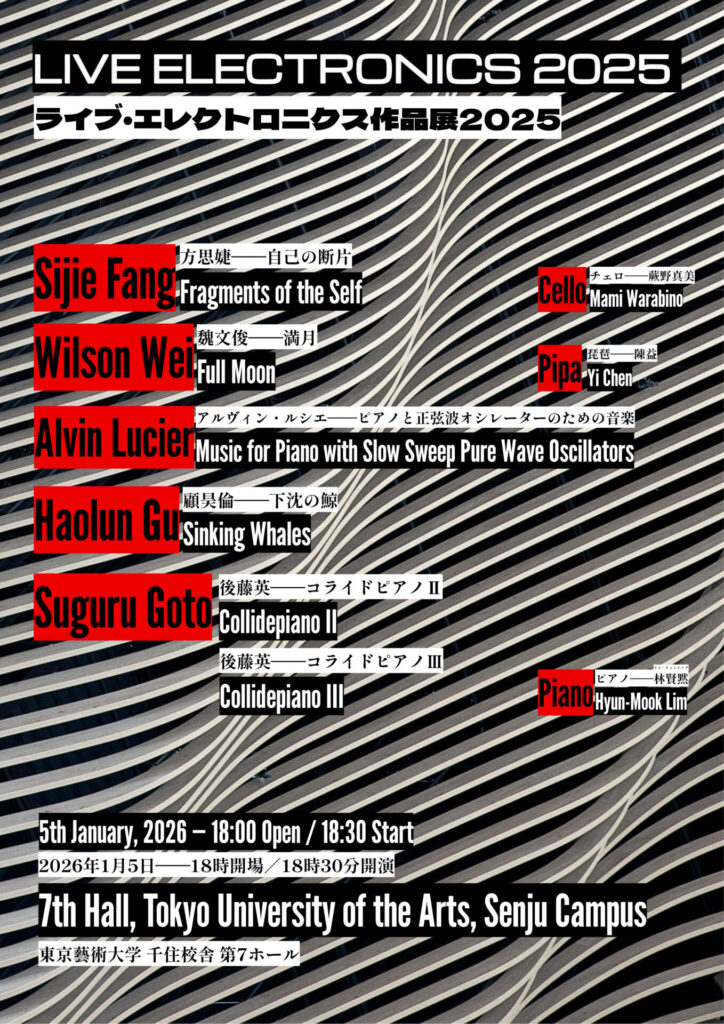
ライブ・エレクトロニクス作品展2025
Collection of Live Electronics 2025
2026年1月5日(月)
時間:18時00分開場・18時30分開演
場所:東京藝術大学 千住キャンパス 第7ホール(東京都足立区千住1-25-1)
入場料無料
Date: Monday, January 5, 2026
Doors Open: 18:00 / Concert Begins: 18:30
Venue: Tokyo University of the Arts, Senju Campus, Seventh Hall
1-25-1 Senju, Adachi-ku, Tokyo 120-0034, Japan
Admission: Free
東京藝術大学 音楽音響創造科・後藤研究室主催で、ライブエレクトロニクス・コンサートを開催します。
ライブエレクトロニクスとは、生演奏に電子音響やコンピュータ処理をリアルタイムで加える音楽表現です。演奏者の音や動きをその場で加工したり、センサーで操作したりすることで、生演奏と電子音が即時に融合する点が特徴です。
後藤研究室では、Max/MSPを中心としたリアルタイム音響合成と演奏者のインタラクションを扱う作品制作・研究を精力的に行っています。
Hosted by the Department of Musical Creativity and the Environment (Music and Sound Creation), Goto Laboratory, Tokyo University of the Arts.
Live electronics is a musical practice in which electronic sound processing or computer-based manipulation is applied to live performance in real time. By processing the performer’s sound or movements on the spot or controlling sound through sensors, it enables an immediate fusion of acoustic performance and electronic sound.
At the Goto Laboratory, we actively conduct research and creative work involving real-time sound synthesis and performer interaction, primarily using Max/MSP.
プログラム
方思婕:自己の断片(2026)——チェロとライブエレクトロニクスのための
魏文俊:満月(2026)——琵琶とライブエレクトロニクスのための
アルヴィン・ルシエ:ピアノと正弦波オシレーターのための音楽(1992)——ピアノと正弦波のための
顧昊倫:下沈の鯨(2021)——ピアノとライブエレクトロニクスのための
後藤英:コライドピアノII(2024)——ピアノとライブエレクトロニクスのための
後藤英:コライドピアノIII(2026)——ピアノとライブエレクトロニクスのための
———————————————————————————————-
チェロ:蕨野真美
琵琶: 陳益
ピアノ:林賢黙
//
Sijie Fang – Fragments of the Self (2026) – for Cello and Live Electronics
Wilson Wei – Full Moon (2026) – for Pipa and Live Electronics
Alvin Lucier – Music for Piano with Slow Sweep Pure Wave Oscillators (1992) – for Piano and Sine Wave
Haolun Gu – Sinking Whales (2021) – for Piano and Live Electronics
Suguru Goto – Collidepiano II (2024)
Suguru Goto – Collidepiano III (2026)
———————————————————————————————-
Cello: Mami Warabino
Pipa: Yi Chen
Piano: Hyun-Mook Lim
プログラム・ノート
方思婕:自己の断片
Sijie Fang - Fragments of the Self
本作は、舞台空間を「意識の内部」として捉える。
チェロ、声、そしてエレクトロニクスが、ひとつの自己対話の場を構成する。
遅延、反復、ずれといった現象は、いずれも情緒のかたちとして立ち上がる。
音は感情の中で絶えず落下し、断片化し、終わりなく流れ続ける。
砕けた構造、閃光のような記憶、拡散していく情動の残響──
それらはすべて「自己を聴く」という過程の産物である。
この作品は、いかなる結論にも向かわない。
これらの感情は、おそらく永遠に終わらないのかもしれない。
(解説:作曲家)
This work conceives the stage space as an interior of consciousness.
The cello, the voice, and the electronics together form a field of self-dialogue.
Phenomena such as delay, repetition, and displacement emerge as contours of emotion.
Sound continually falls, fragments, and flows without end within feeling.
Shattered structures, flash-like memories, and the reverberations of diffused emotions—
all are products of the process of “listening to the self.”
This work strives toward no conclusion.
These emotions may, perhaps, never reach an end.
(Sijie Fang, transl.: Hyun-Mook Lim)
魏文俊:満月
Wilson Wei - Full Moon
時の流れは無情に過ぎ去り 我らはその狭間で立ち尽くす けれど、欠けた月がまた満ちるように美しい刻は、必ずや再び巡り来る
月は古来より、時の移ろいと人の心の無常を映し出してきた。琵琶の音色が描く「個」としての瞬間と、エレクトロニクスが織りなす時空の歪み。その交錯の中に、我々は日々の彷徨と「もののあわれ」を見る。どれほど深い闇に迷い込んでも、円環する月のように、最後には満ち足りた光が降り注ぐ。その不可避な救済への祈りを込めた。
(解説:作曲家)
Time flows on mercilessly, and we stand still within its narrow interval. Yet, just as the waning moon fills once more, the beautiful moment will surely return again.
From ancient times, the moon has mirrored both the passage of time and the transience of the human heart. The sound of the Chinese Pipa delineates the fleeting instant of the “individual”, while the electronics weave distortions of space and time. In their intersection, we glimpse our daily wanderings and the “manifestation of things” themselves. No matter how deeply we lose our way in darkness, the moon’s endless cycle will, at last, pour down a fulfilled light.
This work is imbued with a prayer for that inevitable salvation.
(Wilson Wei, transl.: Hyun-Mook Lim)
アルヴィン・ルシエ:ピアノと正弦波オシレーターのための音楽
Alvin Lucier - Music for Piano with Slow Sweep Pure Wave Oscillators
この作品で二つの正弦波は4オクターヴの範囲に渡ってゆっくりと、不規則なひし形に沿って上下する。ピアニストも同様、正弦波に沿って単一音を演奏する。提案されたタイミングに従って奏者は特定の音符を演奏する。しかし奏者は演奏のタイミングを早めるかずらすことによって脈動のパターンの変化を起こすこともできる。ピアノが正弦波の音程より先に弾かれると、両方の間に生じる脈動は速い速度からゆっくりと減速する。一方で正弦波の音程より後で弾かれると、その逆となる。ピアノが正弦波の音程と同じタイミングで弾かれると、脈動はしばらく停止する。
(解説:作曲家・ 訳:林賢黙)
In Music for Piano with Slow Sweep Pure Wave Oscillators two pure waves slowly sweep up and down the range of four octaves, forming a large irregular diamond shape. As they do so, the pianist plays single tones across the sweeping waves. She has specific notes to play, with suggested timings. She may, however, anticipate or delay a tone thereby changing the beating pattern. If the piano tone sounds before the wave arrives at unison with it, the beating starts fast and slows down. If it sounds after the wave has passed it, it speeds up. If a tone is sounding when the wave reaches unison with it, the beating stops momentarily.
(Alvin Lucier)
顧昊倫:下沈の鯨
Haolun Gu - Sinking Whales
「想像」というのは未知の感覚世界を探索する原始的衝動であり、抽象的特徴の持つ音楽はさらにその中の最も原始的な存在だと思われる。しかし、固有観念において、音楽は普通に時間的構造に依存し、その存在によって、視聴者は導かれ、作品を理解させていく。想像は違う。考えられたもの、聞かれたもの、見られたものまでにより、時間に頼らず、人間は心で仮想風景を描いたり、膨大な物語を築いたりする。本作品はこの発想をもとに、仮想劇場といった概念と融合し、音色の差異、及び舞台表現によって風景の変化を表す。このような「無進行感」に近い体験はまるで鯨が深海に沈んでゆき、緩やかに流れている風景に身を任せ、海流、魚の群れ、星河、チラチラする光と影と流れる音が巨大な体と共鳴しつつ、残響を生じ、漂っていく。
(解説:作曲家)
“Imagination” is a primal impulse to explore unknown sensory worlds, and music with abstract qualities seems to be the most primal existence within it. However, in conventional notions, music typically depends on temporal structures, guiding listeners through its existence to understand the work. Imagination differs. Beyond what is thought, heard, or seen, humans create virtual landscapes in their minds or build vast narratives without relying on time. This work fuses this idea with the concept of a “virtual theater,” expressing changes in landscapes through differences in timbre and stage expression. This experience, close to a sense of “non-progression,” is like a whale sinking into the deep sea, surrendering to a slowly flowing landscape where ocean currents, schools of fish, starry rivers, flickering light and shadow, and flowing sounds resonate with its massive body, generating echoes, and drifting along.
(Haolun Gu, translation: Hyun-Mook Lim)
後藤英:コライドピアノII
Suguru Goto - Collidepiano II
「Collide(楽器)」は、さまざまな楽器を取り上げてきたシリーズで、これまでにトロンボーンやヴィブラフォンなどを扱ってきた。いずれの作品も、ソロ楽器とインタラクティブシステムの組み合わせを基本としている。
これまで作曲者の各作品ではコンセプトや思想、新たなアイデアの提示を重視して制作してきた。一方で、本シリーズでは、あえてそのような概念的枠組みに過度にとらわれず、よりシンプルにライブエレクトロニクスの可能性そのものを探ることを目的としている。
Collidepiano II は本来、ディスクラビアを用いたピアノとライブエレクトロニクス、さらに SoMax を組み合わせて作曲された。しかし、演奏者から、SoMax が即興生成する鍵盤と演奏者が実際に演奏する鍵盤が同じ位置に重なることで、打鍵が妨げられる場合があるとの指摘があった。そのため、SoMax を使用しないバージョンでも再演された。いずれのバージョンを用いても演奏可能である。
本作はシリーズの中でも比較的ピアニスティックな素材を用いており、聴きやすい作品に仕上がっている。
(解説:作曲家)
“Collide (Instrument)” is a series that features various musical instruments, including trombone and vibraphone in its previous works. Each piece is fundamentally based on the combination of a solo instrument and an interactive system.
While the composer’s works have traditionally emphasized concepts, philosophies, and the introduction of new ideas, this series intentionally avoids being overly bound to such conceptual frameworks. Instead, its primary aim is to explore the simple and direct possibilities of live electronics.
Collidepiano II was originally composed for Disklavier piano, live electronics, and SoMax. However, the performer pointed out that during performance, the keys improvised by SoMax occasionally overlapped with the keys the performer needed to play, making it difficult to strike the keys. For this reason, a version without SoMax was also performed. Either version may be used for performance.
Among the pieces in the series, this work employs comparatively pianistic material and results in a composition that is accessible and easy to listen to.
(Suguru Goto)
後藤英:コライドピアノIII
Suguru Goto - Collidepiano III
大学では博士課程の学生である Hyun-Mook Lim を指導した。彼女の研究テーマは、かつて作曲された日本のピアノと電子音楽の作品を、現代のテクノロジーを用いて復元し再演するというものである。論文指導の過程で、彼女はこのテーマにまつわる多くの問題点を指摘し、相談してきた。
その話を聞くうちに、「であれば作曲者である私が、Hyun-Mook Lim が10年後、あるいはその先でも再演可能な作品を、あらかじめ想定して作ってみてはどうか」というアイデアが閃いた。これが Collidepiano III を書く契機となった。
本作もまた、複雑なコンセプトに基づいて作品を構築する方法とは異なり、ライブエレクトロニクスの可能性をシンプルに追求するというシリーズの発想に基づいている。前作の Collidepiano II がピアニスティックで聴きやすい作品であったのに対し、本作ではあえてピアニスティックな素材を避け、ピアノを演奏しながらも「ピアノらしさ」から距離を置いた音素材を扱うことに重点が置かれている。また、作曲においてHyun-Mook Limの卓越したテクニックと感性を念頭に置きながら作った。
I supervised Hyun-Mook Lim, a doctoral student at the university. Her research focuses on restoring and performing Japanese works for piano and electronic music that were composed in the past, using contemporary technology. Throughout the thesis guidance process, she pointed out and consulted with me about many issues related to this topic.
As I listened to these concerns, an idea occurred to me: if so, why shouldn’t I, as a composer, create a new work that Hyun-Mook Lim could perform again ten years from now, or even further in the future? This thought became the impetus for composing Collidepiano III.
Like the other pieces in the series, this work is based on the idea of exploring the possibilities of live electronics in a simple and direct way, rather than constructing the piece around a complex conceptual framework. Whereas Collidepiano II employed pianistic material and resulted in an accessible work, Collidepiano III deliberately avoids pianistic gestures. Instead, it focuses on sound materials that distance themselves from “piano-likeness,” even as the performer continues to play the instrument. Moreover, the piece was composed with Hyun-Mook Lim’s outstanding technique and artistic sensibility in mind.
プロフィール(作曲家)
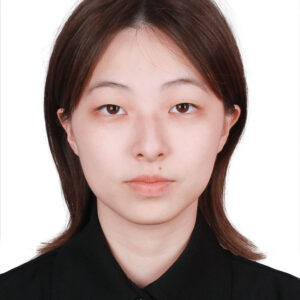
方 思婕/Sijie Fang
1999年中国に生まれ。現在、東京藝術大学音楽環境創造科研究生として後藤英氏に師事。
Born in China in 1999. Currently a research student in the Department of Music and Sound Creation at Tokyo University of the Arts, studying under Professor Suguru Goto.
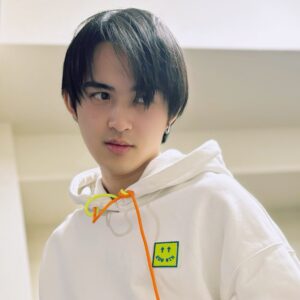
魏 文俊/Wilson Wei
中国・広州生まれ。星海音楽学院芸術とテクノロジーを卒業。洗足学園音楽大学大学院音楽音響デザインコースを修了後、現在、東京藝術大学大学院音楽音響創造科修士課程に在籍。これまでに林昶、上倉紀行、鹿野草平、森威功、後藤英の各氏に師事。
Born in Guangzhou, China. Graduated from the Art and Technology program at Xinghai Conservatory of Music. After completing the Music Acoustic Design course at the Graduate School of Senzoku Gakuen College of Music, currently enrolled in the Master’s program in the Department of Music and Sound Creation at the Graduate School of Tokyo University of the Arts. Previously studied under Chang Lin, Noriyuki Kamikura, Sohei Kano, Takeyoshi Mori, and Suguru Goto.
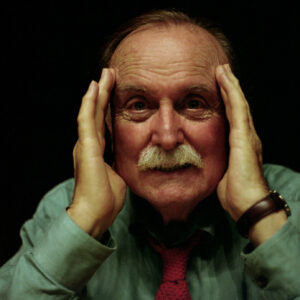
アルヴィン・ルシエ/Alvin Lucier
1931年ニュー・ハンプシャー州生まれ.コネチカット州在住.いわゆる伝統的な意味での演奏家,作曲家とは一線を画するアルヴィン・ルシエは,50年代初頭より,「音楽」という枠を超えて,さまざまな電気テクノロジーを用いた概念的かつ空間的な数々の作品を発表している.一方,「音」という振動現象に焦点をあてたインスタレーション作品を数多く制作.日本を含む世界各地の展覧会/コンサートに招聘されている.現在,ウェズリアン大学教授.
Born in New Hampshire in 1931. Lives in Connecticut. Clearly distinguishing himself from performers and composers in the traditional sense, Alvin LUCIER has created a large number of conceptual and spatial works using various electronic technologies beyond the normal framework of “music” since the beginning of the 1950s. He has also produced many installations focusing on the vibratory phenomenon we call “sound.” LUCIER has been invited to exhibit installations and to give performances in countries all over the world, including Japan. He is currently a professor at Wesleyan University.
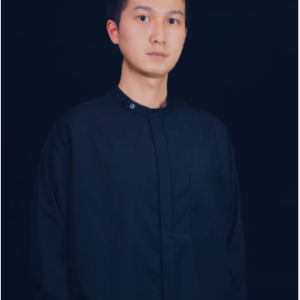
顧 昊倫/Haolun Gu
中国・蘇州市生まれ。2017年上海音楽学院音楽設計と制作科を首席で修了し、2020年東京藝術大学大学院音楽音響創造科修士課程を修了。現在、同大学院博士課程に在籍。作品は、上海電子音楽週間、ニューヨーク電子音響音楽祭、国際コンピュータ音楽会議などに取り上げられているほか、アンサンブル・アッカ20周年記念コンサート公募入選、世界各地で演奏されている。第7回両国アートフェスティバル招待作曲家。これまでに作曲を秦毅、尹明五、陳強斌、西岡龍彦、後藤英の各氏に師事。
A native of Soochow, China. GU is a composer and pianist, received his Bachelor’s degree from Shanghai Conservatory of Music in 2017, and completed his Master degree in Tokyo University of the Arts in 2020. Now he is a PhD student in Tokyo University of the Arts. He has been awarded scholarship by the Japanese Ministry of Education, Culture, Sports, Science and Technology (MEXT) from 2021. He received the 1st Prize at the 3rd Shanghai International Electronic Music Competition (IEMC) in Shanghai. His works have been commissioned and selected by The Centennial of the Electronic Musical Instruments at National Museum of Nature and Science (Tokyo), Future-Tradition New Media Masterclass Series (Shanghai), EMW (Shanghai), NYCEMF (New York), ICMC (Santiago de Chile) as well as Ensemble H[akka] 20th anniversary concert “Hiroshima and music” (Hiroshima), and got commission from the 7th Ryokoku Art Festival. He has studied composition with Yi Qin, Mingwu Yin, Qiangbin Chen, Eric Arnal, Tatsuhiko Nishioka, and Suguru Goto.
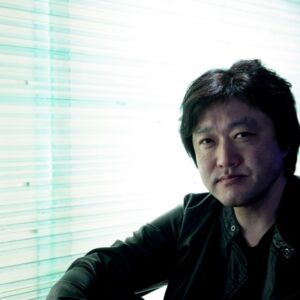
後藤 英/Suguru Goto
作曲家、ニューメディア・アーティスト。国際的に評価されており世界活地で活躍。刺激的な作品で新たなテクノロジーと関連させて発表している。フランス、パリにあるポンピドゥー・センターのIRCAMの招待作曲家、研究員、ボルドー芸術大学の准教授を経て、現在は東京芸術大学の准教授。 主な賞歴は、ボストン・シンフォニー・オーケストラ・フェローシップ、タングルウッド音楽祭より、クーセヴィツキー賞、ワシントン州のマルゼナ国際作曲コンペティションにて第1位、ドイツにてベルリナー・コンポジション・アウフトラーゲ1994、パリのユネスコで行われた、IMC国際作曲家会議にて入選、フランス政府よりDICREAM、ドイツ、ベルリンのミュージック・シアター・ナウ・アワード2008にて受賞、フランス、バン・ニューメリック4、アンガン・デ・バン・デジタル・アート国際フェスティバルにて、「OFQJダンス・ニューテクノロジー賞」を受賞、2010年ブラジルのFileフェスティバルにてFILE PRIX LUXのElectronic Sonority Honor Award 賞、2011年イタリアにてAction Sharing 2の大賞を受賞、2013年KAO国際キネティック・アート・コンペティションにて第2位、同年オーストリアのアルスエレクトニカにてデジタル・ミュージック&サウンド・アートの栄誉賞を受賞などが挙げられる。作品は世界各国の音楽祭、レゾナンス/IRCAM、タングルウッド音楽祭、ICC、SONAR、 Haus der Kultures der Welt, ISEA、NIME, ヴェネツィアビエンナーレなどにて演奏されている。
Suguru Goto is a composer/performer, an inventor and a multimedia artist and he is considered one of the most innovative and the mouthpiece of a new generation of Japanese artists. He is highly connected to technical experimentation in the artistic field and to the extension of the existing potentialities in the relation man-machine. In his works the new technologies mix up in interactive installations and experimental performances; he is the one who invented the so-called virtual music instruments, able to create an interface for the communication between human movements and the computer, where sound and video image are controlled by virtual music instruments in real-time through computers. Lately, he has been creating the robots, which perform acoustic instruments, and he is in process of constructing a robot orchestra. He has been internationally active and has received numerous prizes and fellowships, such as Koussevitzky Prize, BSO fellowships, the first prize at the Marzena, Berliner Kompositionaufträge, a prize by the IMC International Rostrum of Composers in UNESCO, Paris, DIRECAM, French Cultural Minister, Music Theater Award 2008 in Berlin, “OFQJ-dance and new technology prize” at Bains Numérique #4, International Festival of digital art of Enghein-Les-Bains, in France, in 2009 and so on. His works have been performed in major festivals, such as Resonaces/IRCAM, Sonar, ICC, Haus der Kultures der Welt, ISEA, NIME, AV Festival, STRP Festival 2009, Venice Biennale, etc.
プロフィール(演奏者)
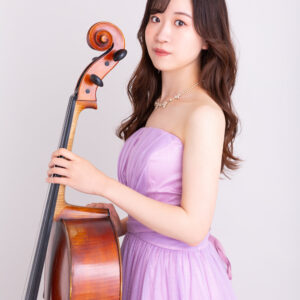
蕨野真美/Mami Warabino
5歳よりチェロを始める。
桐朋女子高等学校音楽科、桐朋学園大学音楽学部を卒業。常光聡氏、毛利伯郎氏に師事。
第19回 泉の森ジュニアチェロコンクール銅賞受賞。
第74回 全日本学生音楽コンクール東京大会大学の部 第3位。IMA2022奨励賞受賞。
サントリーホール室内楽アカデミー第7期フェロー。
ヴィオラスペース、プロジェクトQ、学内成績優秀者による卒業演奏会、室内楽演奏会などに出演。
スイスにてルツェルン音楽祭アカデミーに参加。Marc Coppey氏、Éric-Maria Couturier氏のマスタークラスを受講。
現在、桐朋学園大学大学院研究科修士課程2年に在籍。桐朋学園大学附属「子供のための音楽教室」大宮教室チェロ非常勤講師。
Began studying cello at age 5.
Graduated from the Music Department of Toho Girls’ High School and the Music Faculty of Toho Gakuen School of Music, studying under Satoshi Tsunemitsu and Hakuro Mouri.
Received the Bronze Prize at the 19th Izumi no Mori Junior Cello Competition.
Placed 3rd in the University Division of the Tokyo Preliminary at the 74th All-Japan Student Music Competition. Received the IMA2022 Encouragement Award.
Fellow of the 7th Suntory Hall Chamber Music Academy.
Performed at Viola Space, Project Q, graduation concert for outstanding academic performers, chamber music concerts, and others.
Participated in the Lucerne Festival Academy in Switzerland. Attended masterclasses by Marc Coppey and Éric-Maria Couturier.
Currently in the second year of the Master’s program at the Toho Gakuen University Graduate School. Part-time cello instructor at the Omiya branch of Toho Gakuen University Affiliated “Music Classroom for Children”
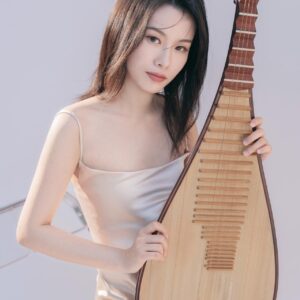
陳益/Yi Chen
中国広東省生まれ。中国琵琶奏者、教育者。現在、東京藝術大学楽理科修士1年に在籍。2023年に中国音楽学院琵琶演奏専攻学部を卒業。
2017年第三回「敦煌杯」では銅賞を受賞。かつて惠州市民族管弦楽団にて琵琶首席を務める。6歳より琵琶を始め、楊婷婷、胡小武の各氏に師事。現在は植村幸生に師事している。
Born in Guangdong Province, China. Chinese pipa player and educator. Currently in the first year of the Master’s program in the Musicology Department at Tokyo University of the Arts. Graduated from the Pipa Performance undergraduate program at the Central Conservatory of Music in China in 2023.
Received the Bronze Prize at the 3rd “Dunhuang Cup” in 2017. Formerly served as principal pipa player in the Huizhou City Ethnic Orchestra. Began studying pipa at age 6, under Tingting Yang and Xiaowu Hu. Currently studying under Yukio Uemura.
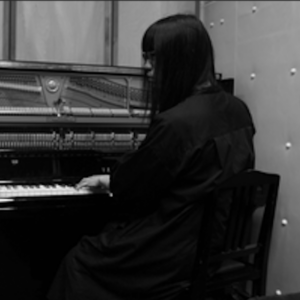
林 賢黙/Hyun-Mook Lim
林賢黙(イム・ヒョンムック)は主に現代音楽を演奏するピアニスト。現代音楽の演奏を始めた以来、数々の作曲家と協業しながら作品を演奏し、又は献呈されてきている。
彼女の演奏は音と人間との関わり、特に過去の作品を現代の今・ここの時点で演奏することにおいての演奏者の責任や立ち位置についての興味を表している。彼女が興味を持っている音の表現の方向は音と社会、音と身体、音とジェンダーなどの多方面にまたがっている。しかしそれは単なる再演ではなく、今・ここの時代の演奏者としての創作的なアプローチに基づいている。
彼女は現在東京に滞在しながら韓国と日本両方を中心に活動し、最近はピアノと電子音楽のための作品を用いた演奏経験の拡張と現代のテクノロジーによる作品の復元を中心に演奏活動を続けている。
Hyun-Mook Lim is a pianist specializing in new modern musics in our age. She has worked with many composers of our age and has performed their works.
Her performances show an interest in the relationship between sound and human beings, especially in the performer’s responsibility or social position when performing works from the past in this age. Her performances show an interest in the various relationships for example between sound and society, sound and the body, sound and gender, etc. but that doesn’t mean just simply re-performance, but rather based on the creative approach as the modern performer.
She is currently residing in Tokyo, Japan, and performing both in Japan and Korea. She has recently concentrated on expanding her performance experience through performing music for Piano and electronics and restoring outdated electronic works with modern technologies.